

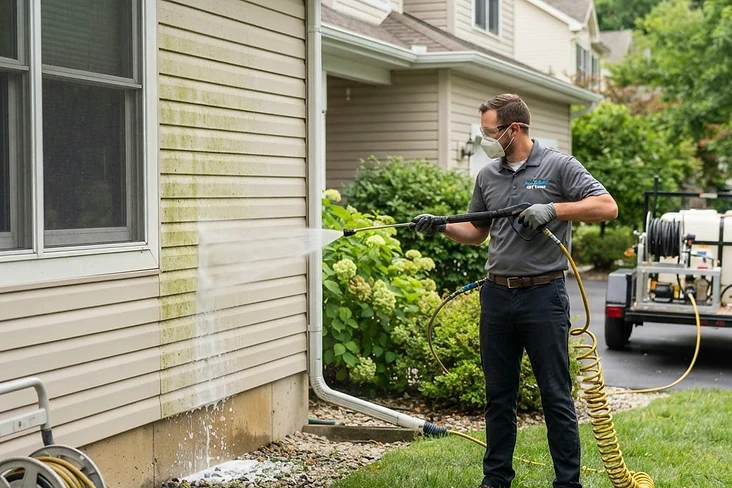





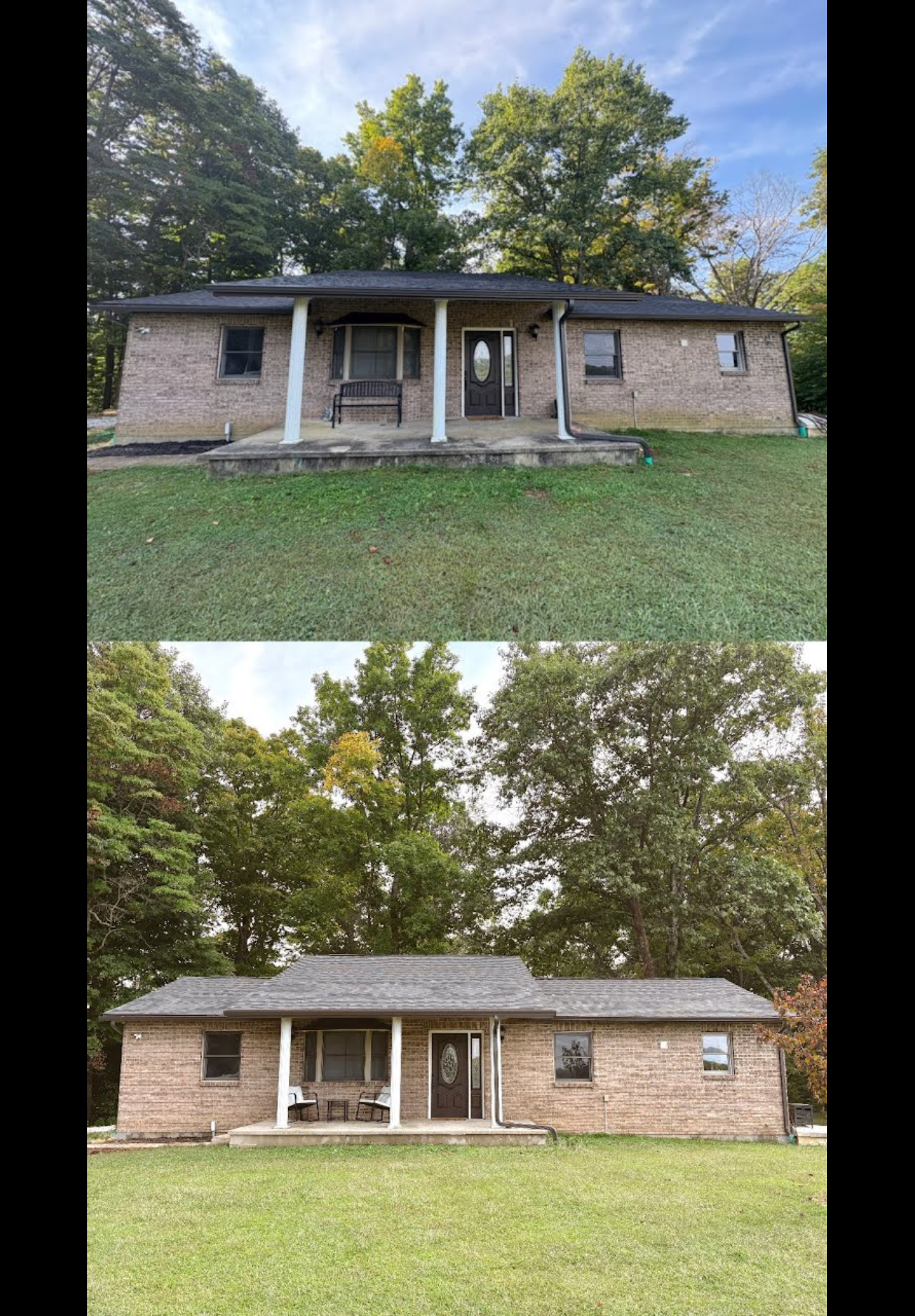

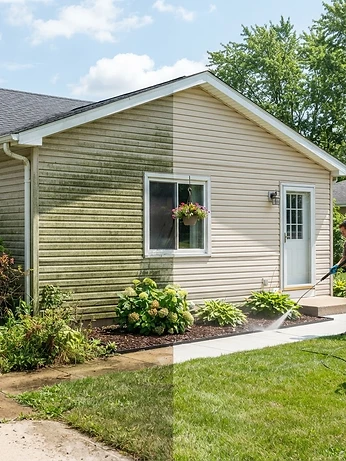

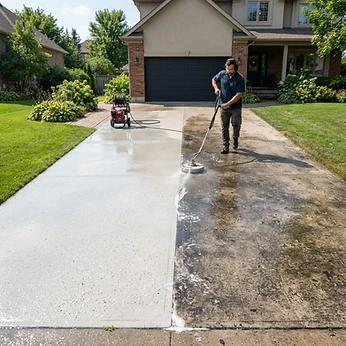




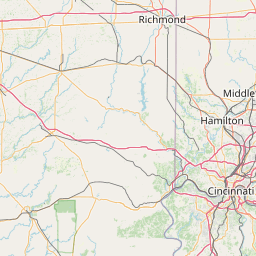
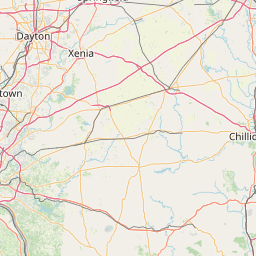
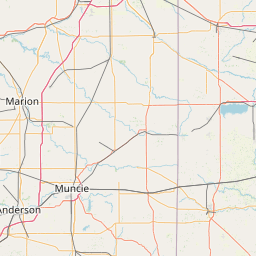
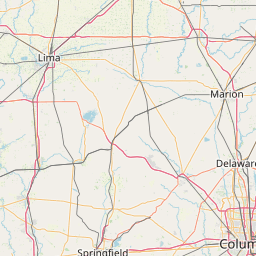
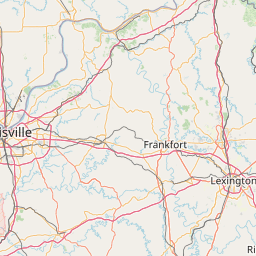
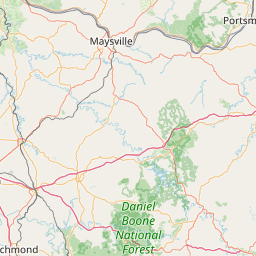
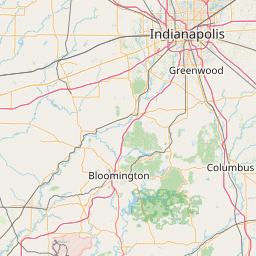
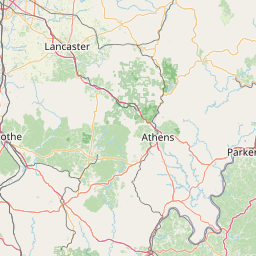
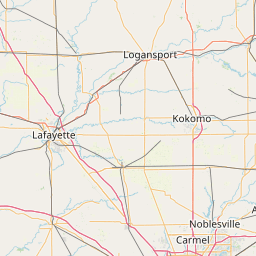
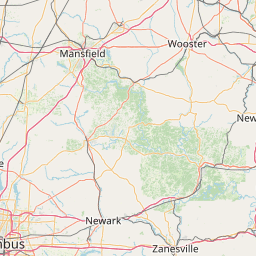
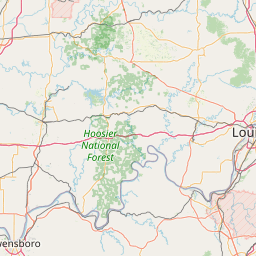
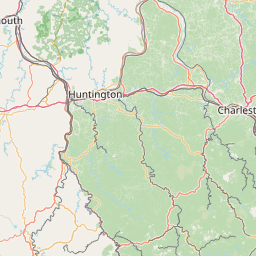
Around Lawrenceburg and the 50-mile region we serve, a home exterior grows grime faster than most homeowners expect — the Ohio Valley's humidity, shade, and river exposure grow algae, mildew, and moss on siding, roofs, and concrete faster than a drier climate would. The good news: nearly every stain is a living organism you can kill at the root, not just blast off.
Why Soft Washing Beats Pressure Washing on a Home
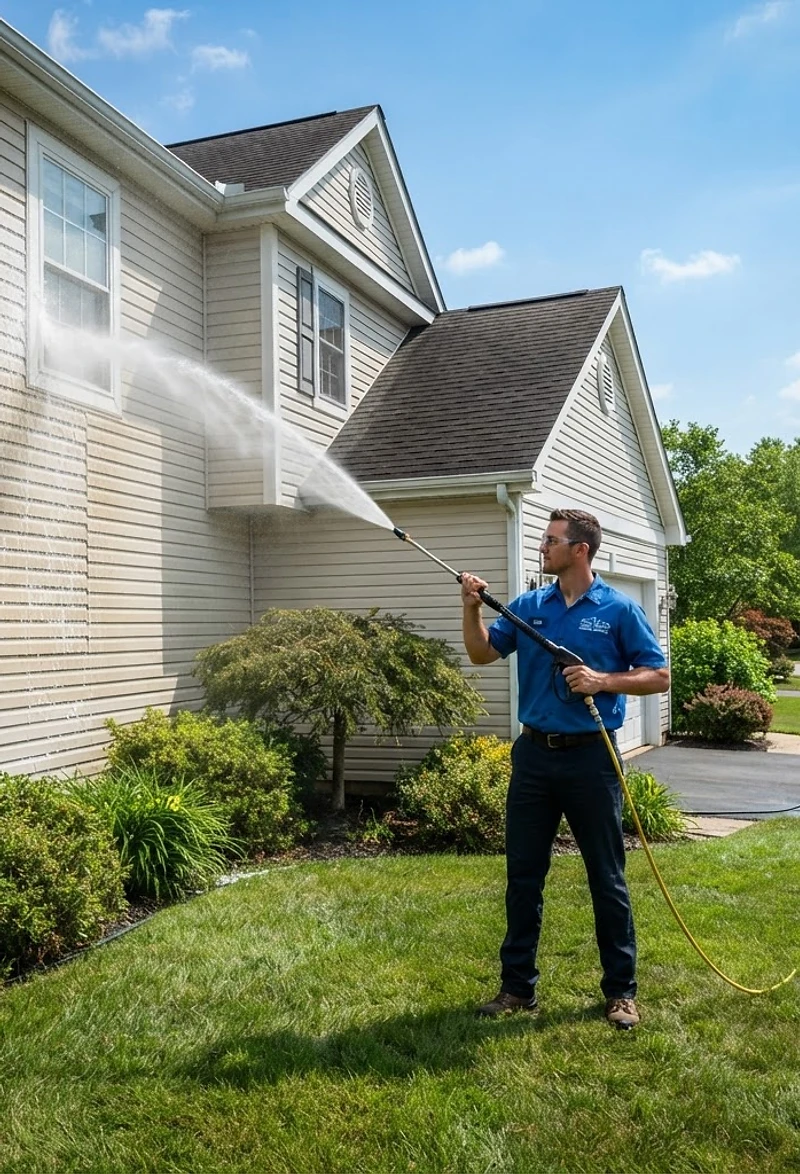
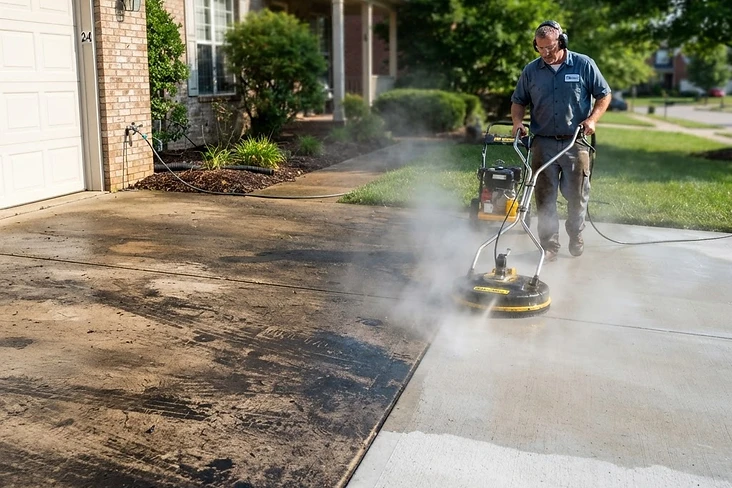
Pressure washing siding forces water behind the panels (rot and interior leaks), strips paint, and etches vinyl — and it only removes the visible growth, leaving the root behind to regrow within months. Soft washing applies a biodegradable cleaning solution that kills algae, mold, and mildew at the root, then rinses with low pressure. No water behind the siding, no damage to the finish, and a clean that lasts years, not months.
The Surfaces That Always Need a Soft Wash
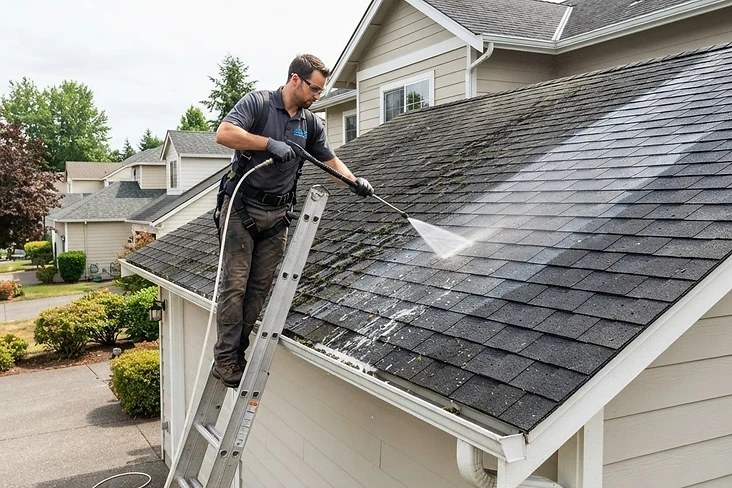
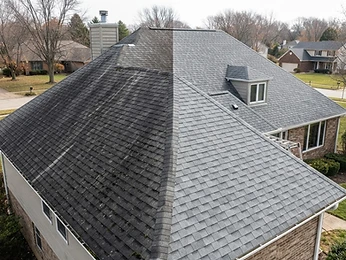
Vinyl and fiber cement siding, stucco, painted trim, and every kind of roof are the surfaces a pressure washer would destroy. Asphalt shingles in particular should never be pressure washed — it strips the protective granules and voids the manufacturer warranty. A roof soft wash kills the black streaks (gloeocapsa magma) and moss with zero pressure on the shingles, and the roof stays clean for 3–5 years.
The Bottom Line
You cannot change the Ohio Valley climate — but the grime it grows is preventable with the right method and a crew that understands how this weather behaves. A regular soft-wash schedule keeps siding and roofs free of algae and mildew for years, and that is exactly the gap Ridgeline fills for homeowners across our 50-mile radius from 47025.
Seeing green siding or black roof streaks?
Get a free estimate before the summer sun bakes the stains on and turns a soft-wash job into a bigger problem.
Request My Free Estimate