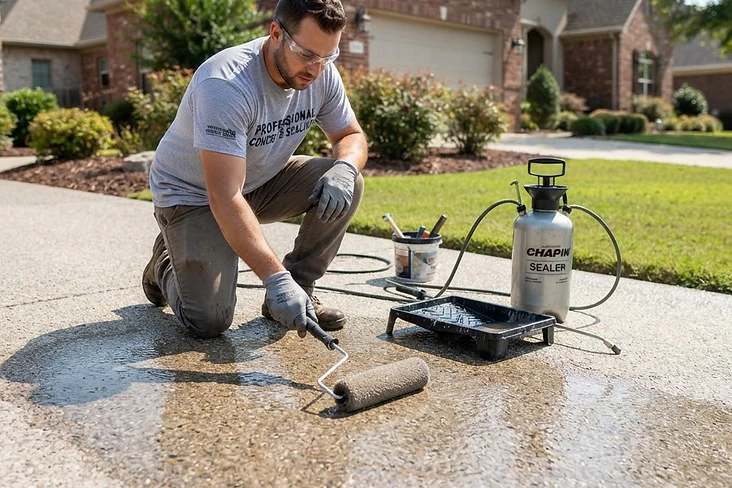
Why seal after washing
Washing opens the pores of the concrete; sealing fills them. Without a sealer, oil, salt, and water soak right back in and the staining restarts within weeks. A sealer is what turns a one-time clean into a lasting result.
Penetrating vs film-forming sealers
Penetrating sealers soak into the concrete and repel water and salt without changing the look — ideal for driveways you want to keep natural. Film-forming sealers leave a protective coating (matte or glossy) that sits on top and resists oil and stains more aggressively. We match the sealer to the surface and the look you want.
Paver joint sand lock
After we wash and re-sand pavers, the sealer locks the polymeric sand in place so the joints do not wash out and the pavers stay tight. Skipping the sealer means the re-sand erodes within a season.
When to seal
Seal right after a fresh wash, when the concrete is clean and dry. Reseal every 2–3 years for film-formers, 3–5 for penetrating sealers. We will tell you which schedule fits your surface.
Salt, freeze-thaw & longevity
In an Ohio Valley winter, salt and freeze-thaw work concrete hard. A sealed driveway resists the salt and the water that freezes in the pores and spalls the surface — the single biggest longevity upgrade you can make after a wash.