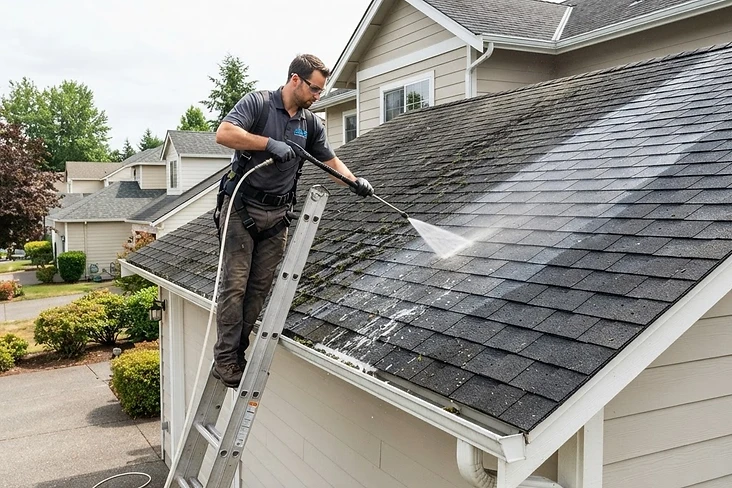
What the black streaks actually are
The black streaks on asphalt roofs are gloeocapsa magma, an airborne algae that colonizes the limestone filler in modern shingles. It spreads down the roof with rain and turns whole slopes dark. It is not dirt, and a pressure wash will not kill it — it will just damage the shingles.
Moss and lichen: the bigger threat
Moss and lichen grow into the shingle, lifting the edges and trapping moisture that works the seal strip loose. In freeze-thaw, the lifted edges crack and leak. We treat moss and lichen with the same roof-safe solution; heavy moss may need a follow-up as it dies and releases over a few weeks.
The zero-pressure method
We never pressure wash a roof — it strips granules and voids the manufacturer warranty. We apply a roof-safe cleaning solution with a dedicated pump, let it dwell, and rinse with garden-hose pressure. The algae dies at the root and rinses away.
Asphalt, metal, and tile roofs
The same method works on asphalt, metal, and tile, with the solution strength adjusted to the material. Metal roofs get a lighter mix to protect the finish; tile gets a longer dwell to lift the growth in the pores.
How long a roof wash lasts
Because we kill the organism, a properly soft-washed roof typically stays clean for 3–5 years — far longer than a pressure wash, and without the damage.