Why 47025 grows grime faster than most places
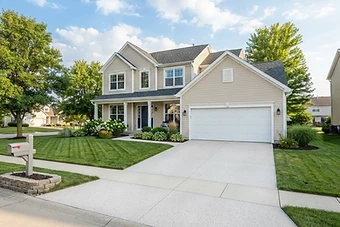
River humidity, shade from mature trees, and frequent freeze-thaw cycles all feed the algae, mildew, and moss that turn siding green, roofs black, and concrete dark — faster than a drier inland climate. A seasonal soft-wash and pressure-wash routine is how you stay ahead of it.
Spring: soft wash the siding and roof, clean the gutters
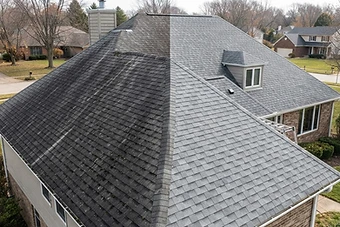
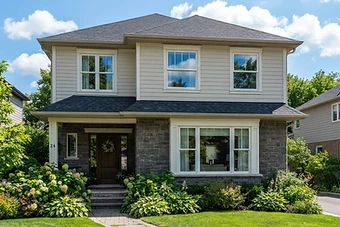
Spring is the time to soft wash the siding and roof — it kills the algae and mildew that grew over the damp winter before the summer sun bakes the stains on. Clean the gutters after the seed pods fall, and inspect the roof for any moss that needs a follow-up treatment.
Summer: pressure wash the driveway, deck, and patio
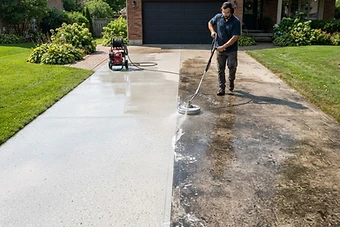
Summer is for high-pressure work — driveways, sidewalks, patios, and decks. A clean deck is also the right time to stain and seal before fall. Pressure wash at the right pressure for each surface; soft wash anything delicate.
Fall: gutters and concrete sealing
Clean the gutters again after the leaves fall — twice if you are under heavy tree cover. Seal the concrete driveway and patio before the freeze so salt and water do not soak in and spall the surface over the winter.
Winter: ice dams and concrete care
Watch for ice dams at the eaves — a sign of attic heat loss — and a clean gutter helps prevent them. Keep de-icing salt off sealed concrete or it will break down the sealer faster.
A 47025 quick-fact sheet
Climate: humid continental with frequent winter freeze-thaw. What grows here: algae (green siding, black roof streaks), mildew, moss. Cleaning cadence: soft wash siding/roof every 2–3 years, pressure wash hardscapes yearly, gutters twice a year. Service radius: 50 miles from Lawrenceburg.